Skip to case study
PortfolioCase Study

Web design & development · UX engineering

CODE/CLASH
Platform

A comic-inspired digital platform supporting Towson University's student hackathon through event discovery, registration, and participant coordination.

Date
July 2026 – November 2026
Visit live site
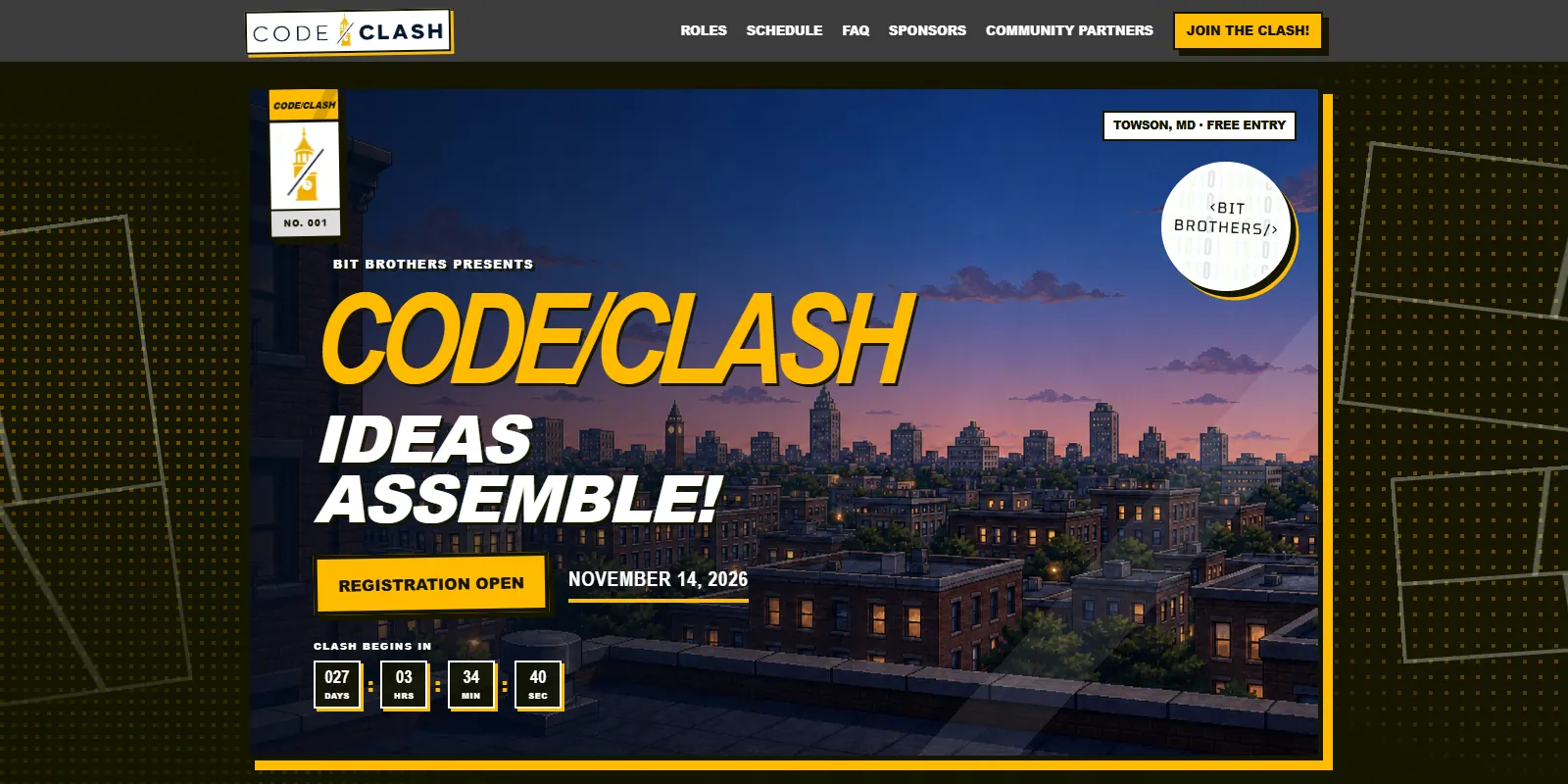
Current CODE/CLASH homepage showing registration open for the November 14, 2026 event
Current live homepageCaptured October 2026
01

Overview

CODE/CLASH is a student-led hackathon initiative organized by Bit Brothers at Towson University. I designed and developed the public-facing platform where students can learn about the event, explore ways to participate, access registration, and prepare for the day.

What began as a website for a proposed 24-hour hackathon evolved alongside the initiative into a live platform supporting a confirmed 12-hour event on November 14, 2026.

Role
UX Engineer & Developer
Status
Live platform · Inaugural event scheduled for November 14, 2026
Focus
UX design, front-end development, information architecture, event experience
02

The Problem

First-time participants needed to understand what a hackathon is, how to register, whether they needed a team, and what to expect before arriving. Organizers needed the same information to stay consistent while the schedule, format, and participation process evolved.

The challenge was to create one reliable starting point that lowered the barrier to participation while remaining flexible enough to support a student-led event in active development.

03

Process

  1. Understand the audiences

    I mapped the information needs of prospective participants and organizers, then used them to shape the navigation, content hierarchy, and registration guidance.

  2. Build an approachable identity

    Bold type, high contrast, and comic-inspired graphics made the event distinctive without hiding practical information from students attending their first hackathon.

  3. Adapt the platform

    As planning moved from a proposed 24-hour format to a confirmed 12-hour event, I updated the schedule, registration communication, and supporting tools instead of treating the first release as final.

Registration experience

One journey across the event's tools

The current plan extends beyond the original embedded application form. Students first confirm the event is right for them, then move through registration and into the competition workspace.

  1. 01Discover

    Review the date, format, roles, schedule, and FAQs on the live event site.

  2. 02Register

    Follow the external registration handoff and provide participation, team, dietary, and accessibility information.

  3. 03Compete

    Use Devpost for the competition workflow and project submission as event planning is finalized.
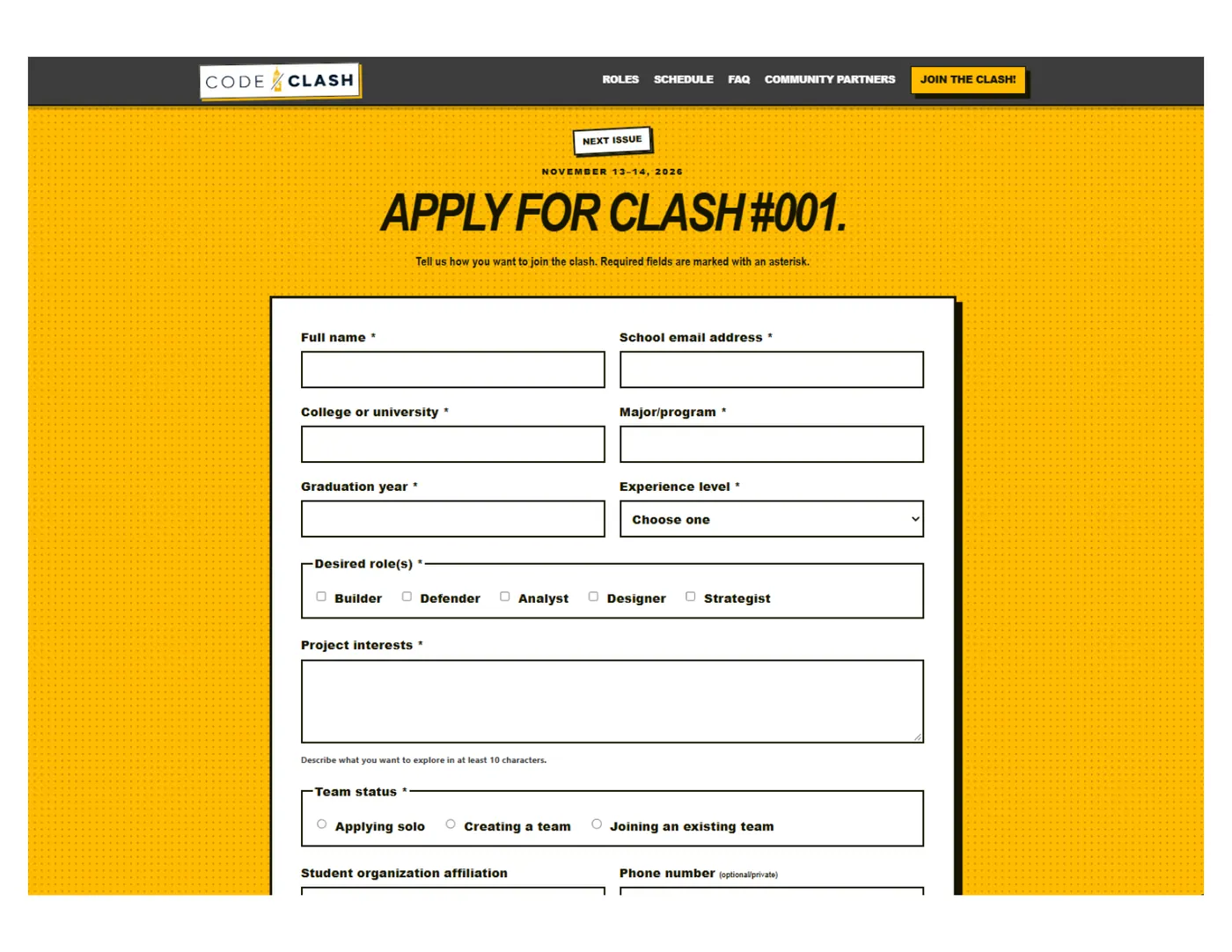
Earlier CODE/CLASH application form collecting participant information, preferred roles, and team status
The original application established the information organizers need; the current journey carries those requirements into the external registration workflow.
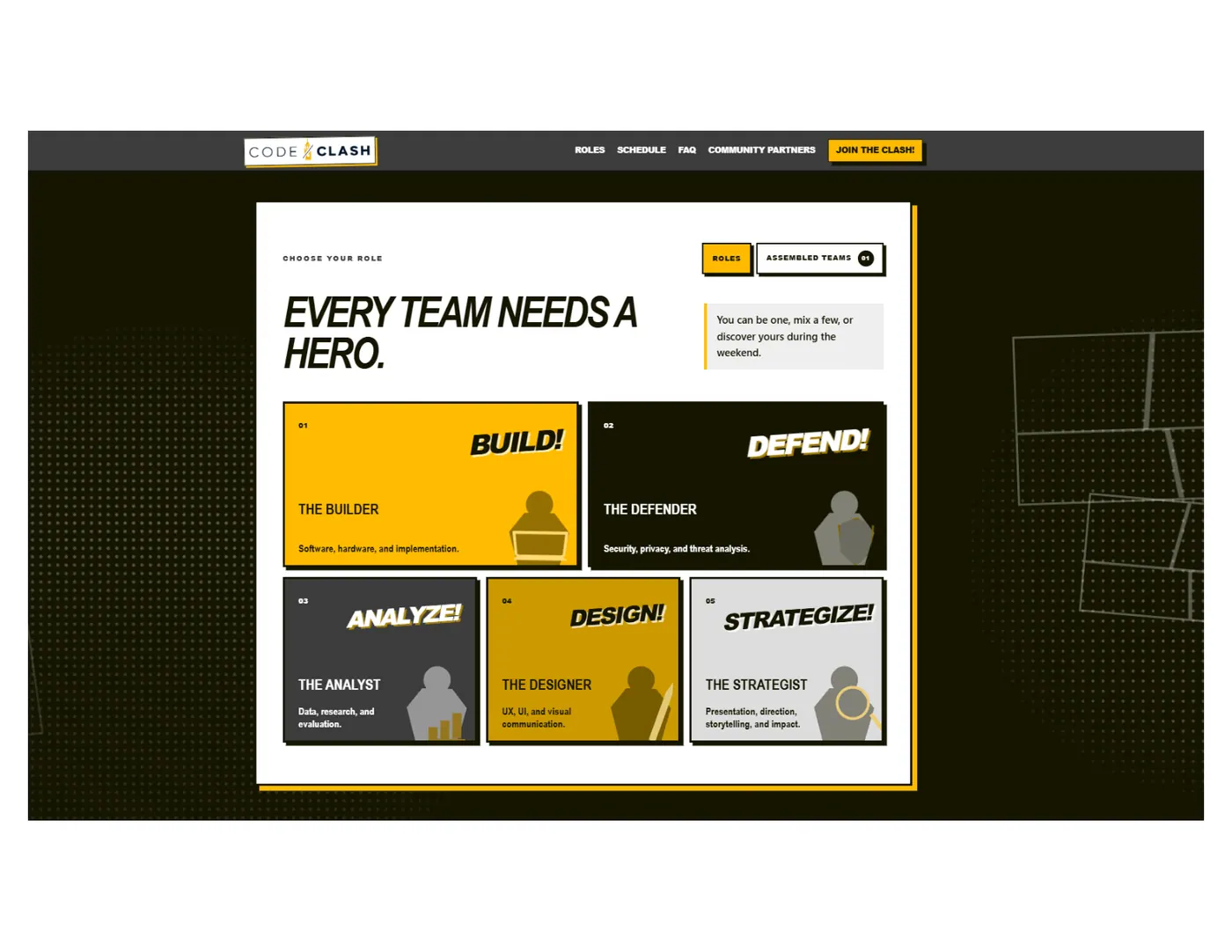
CODE/CLASH participant roles showing builder, defender, analyst, designer, and strategist paths

Participant roles

Make contribution paths visible

Builder, Defender, Analyst, Designer, and Strategist roles show beginners that a useful contribution is not limited to writing code. Making the roles prominent helps students recognize where they can start and what a balanced team needs.

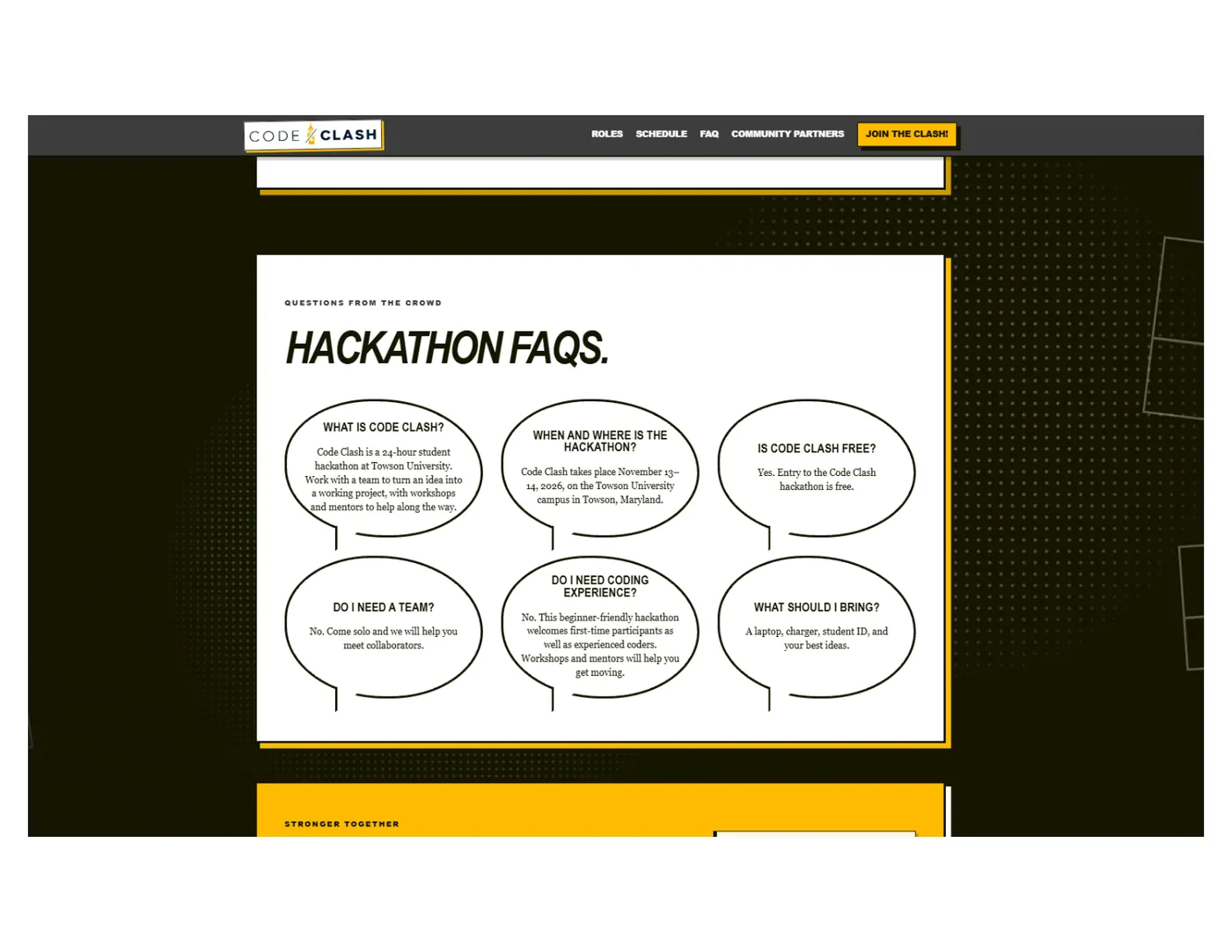
CODE/CLASH FAQ answering common first-time participant questions

Accessibility

Reduce uncertainty before arrival

The FAQ answers the questions that can stop a first-time participant from registering: experience expectations, teams, cost, equipment, and event-day logistics. Clear answers make the experience more approachable before a student commits.

04

Outcome

The result is a live platform supporting CODE/CLASH's inaugural event on November 14, 2026. It gives students one place to understand the event and participation process while supporting outreach and coordination across the organizing team.

The current competition includes three tracks: AI & Data, Cybersecurity & Privacy, and Community & Social Impact. The platform will continue to evolve as registration and event operations progress.

Reflection

CODE/CLASH has pushed me to think beyond individual screens. Designing for a real event means connecting implementation with how people discover information, make decisions, coordinate with others, and respond when plans change.